TUI River Cruise
This Post is Sponsored by TUI River Cruises
River cruising has never been more popular, in this post we discuss the seven different rivers and waterways you could explore with TUI. This will then help you decide which river cruise is right for you.

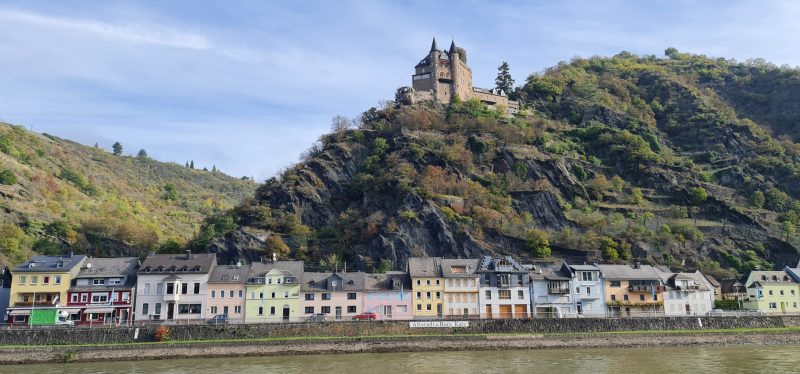
The Rhine - Medieval Europe, Castles and Wine
The Rhine is the classic European river cruise that has been a major transport route dating back to Roman times. Featuring the breathtaking middle Rhine Valley, historic cities, castles and vineyards.
Main Towns and Cities on the Rhine
Cologne in Germany
Highlights include the Old Town known as the Altstadt, which dates back to the 1940s. It was rebuilt after 70% of the city was destroyed from air raids during the second world war. Its features include the Alter Markt, this cobble stone market square has traditional breweries serving Kölsch beer and colourful reconstructed facades. Here you will also find the Rathaus City Hall which documents over 800 years of architectural history.
The jewel in the crown of Cologne is definitely Kölner Dom or as it is known to you and me Cologne cathedral. This gothic cathedral dates back to 1248 and has two towers that stand 516 feet at the top of the spire, over 6 million people visit every year and once you’ve seen it you will understand why.
Düsseldorf in Germany
Düsseldorf is a more cosmopolitan and modern side of the Rhine with highlights being, The Altstadt, where you can walk through the narrow cobblestone alleyways and it is known as the longest bar in the world because of its hundreds of micro breweries and pubs.
World class modern architecture that includes The Twist, this reflective building was designed by the late Frank Gehry whose work includes the Guggenheim museum in Bilbao and the Walt Disney concert hall in Los Angeles, to name just a few.
In Düsseldorf you will also find The Rheinturm, standing 240 metres (789 feet) high, this unmistakable communication tower gives you unparalleled views of the city and features a revolving restaurant that does one revolution 72 minutes.
Rüdesheim in Germany
If you love wine then you will definitely love Rüdesheim, it has dozens of family run wine estates and wine makers. The steep slate soiled vineyards produce world class Riesling and Spätburgunder (Pinot Noir)
Siegfrieds Mechanical museum, is a bonkers museum which features over three hundred self playing instruments, some as small as a matchbox, others filling a whole room, with some dating back to the 18th century. Opened in 1969 and founded by Siegfried Wendal this is a must do when in Rüdesheim.
A must try while in Rüdesheim is a Rüdesheimer Kaffee, this alcoholic coffee drink was invented in Rüdesheim by German television chef Hans Karl Adam in 1957, ingredients include sugar cubes and Asbach Uralt brandy, it’s very strong but delicious!
Boppard in Germany
Like many towns and cities on the Rhein Boppard produces world class wines especially Riesling, famous for its steep hillside vineyards, it’s the largest wine growing town in the central Rhine region. The town also features Roman fort walls dating back to at least the 4th century and are widely regarded as best preserved in all of Germany
The medieval old town is a must see, this car free area features beautiful half timber houses and the stunning 12th century Romanesque Basilica of St Severus that stands on the site of former Roman baths.
The Bopparder Hamm, this massive looping horse shoe bend in the Rhine gives you stunning panoramic views, make sure you are on the top deck with your camera at the ready for this not to be missed opportunity.
Koblenz in Germany
Koblenz is one of Germany’s oldest cities and is famous for the German corner (Deutsches Eck), the headland where the Rhine and Moselle rivers meet. The exact spot where the two rivers meet is marked by a giant statue of Emperor William the first.
The Ehrenbreitstein Fortress is the second largest preserved fortress in Europe that dates back to the early 1800’s. The best way to get to the fort is via the cable car that takes you from the river bank across the Rhine, and as you would expect, the views are stunning.
Strasbourg in France
Strasbourg Cathedral or as it is known the Cathedral of our Lady of Strasbourg is considered to be one of the finest Rayonnant Gothic architecture in the world. It stands 142 metres or 466 feet high with construction starting in 1015, it took over 400 years to complete.
La Petite France has to be seen to be believed, with some buildings dating back to the fifteen hundreds, it’s probably the closest thing you will do to stepping back in time. Give yourself plenty of time to explore this amazing place!
Strasbourg is also the home of the European parliament and The Kronenbourg brewery that dates back to 1664.
Basel in Switzerland
Basel is Switzerland’s cultural capital and has almost 40 art museums; it sits in a unique border triangle with both France and Germany. Basel old town is world famous and features the 800 years old red sandstone Basel Minster. The Minster is the last resting place of Erasmus of Rotterdam, who is widely regarded as one of the great intellectual thinkers of renaissance Europe.
Tinguely fountains designed by ground breaking Swiss painter and Sculptor Jean Tinguely are a perfect example of Tinguely’s kinetic art, the city is adorned with many of his creations.
As with all cruises it’s not just about the ports of call, a Rhine river cruise offers stunning scenery with a succession of hilltop castles, cliffs, villages and vineyards with the scenery between Rüdesheim and Koblenz being some of the best you will see. TUI calls this middle Rhine valley the highlight of the cruise and once you’ve seen it you will understand why!
The Main Taking you into the Heart of Germany
Most of TUI’s Main river cruises start and end in Frankfurt, here are some of the highlights:
Frankfurt in Germany
Mixing perfectly modern and mediaeval architecture, Frankfurt is the financial capital of Germany and is nicknamed Manhattan because of its striking skyscraper skyline.
If modern is not your thing head to Römerberg, it’s the historic old town that features the Römer city hall and timber framed houses.
Frankfurt cathedral or the Imperial Dome of Saint Bartholomew is also in the old town and dates back to 1239, this Roman Catholic Gothic church is the largest religious building in the city and was regularly used for elections and coronations.
Many German kings and emperors were crowned here.
Würzburg in Germany
This historic university city is situated in Northern Bavaria. The Würzburg Residence dates back to 1720 and is a UNESCO world heritage palace that features large ceiling frescos by Venetian artist Giovanni Tiepolo.
Here you will find the Marienburg Fortress, this reconstructed 13th century fortress houses history and art museums and has stunning terrace gardens, and Würzberg Cathedral which dates back to 1040 and features both Romanesque and Baroque architecture; the Cathedral has 20 bells with a combined weight of 26 tons.
Bamberg in Germany
Bamberg is known as being one of Germany’s most beautiful towns. The UNESCO listed old town has 2400 timber framed buildings that date back to the 11th century.
There are over 50 breweries in the Bamberg region with its Rauchbier (smoked beer) being its most famous, this malty dark lager has a distinct campfire or bacon flavour and is a must try. The Old Town Hall is a half timbered fresco decorated building that has to be seen to be believed, and it houses one of the most significant porcelain collections in Europe.
Miltenberg in Germany
The Schnatterloch and Market square features a 1583 renaissance fountain and the famous Schnatterloch gateway, the market square, which ironically is triangular in shape and is one of Germany’s most photographed buildings. The town’s main street is lined with half timbered buildings, some of which are in excess of 600 years old.
Hotel Zum Reisen is one of the oldest hotels in Germany and has been frequented by King Louie the fourth, Napoleon Bonaparte and the king of rock and roll himself Elvis Presley.
Nuremberg in Germany
Nuremberg is one of the best ports for 20th century history on any river cruise, offering a rich mix of vibrant local culture, world war two history and medieval architecture.
The Nuremberg trials took place in courtroom 600 at the Palace of Justice between November 1945 and October 1946, it’s a must visit for any 20th century history buff.
You will also find, Albrect Dürer’s House, the former home of Germany’s most famous Renaissance artist, this timbered gothic house survived world war two bombings and features original art work and an artist workshop.
The Kaiserburg, also known as the Imperial Castle of Nuremberg features stunning city views, and a complex of royal gardens and palaces.
Choose a Main river cruise if you want to see medieval towns, palaces, castles and World War II history.
The Moselle - Germany’s Wine Country
The Romans planted vines here in the 1st century and vineyards still dominate the steep slopes. Places of interest on the Moselle include:
Trier in Germany
Trier is widely regarded as Germany’s oldest city and is steeped in Roman history. Emperor Constantine the Great made Trier one of the major centres of the Roman Empire and even took up residency here.
Porta Nigra is a grand Roman gateway with towers made from giant slabs, and dates back to 180 AD, and also here is the Kaiserthermen which translates to Imperial Baths, which are Roman baths that feature hot water baths the size of theatres. There is also a labyrinth of underground tunnels and ancient ruins that date back 1600 years.
Trier Cathedral (St. Peter’s Cathedral) is where Baroque, Gothic and Romanesque architecture and art come together in this Fortress style cathedral, after being destroyed twice, what you see today dates back to the 11th century.
Trier is also the birthplace of Philosopher and Economist Karl Marx, and his former home is now a museum.
Bernkastel-Kues in Germany
Known as the Riesling capital the town is surrounded by famous vineyards and packed with tasting cellars and wine taverns. The Historic Old Town features an iconic narrow Spitzhäuschen house, the Renaissance town hall and crooked timber framed houses.
Make your way up to Burg Landshut castle ruins perched high above the vineyards for unparalleled views of the Mosel Valley.
Go across to the quieter Kues side of the river to visit Nikolaus Hospital which was founded in 1465 and still serves as an old people’s home, or visit Zylinderhaus vintage car museum with cars dating back to the 1930’s.
Cochem in Germany
Cochem is a medieval town located on the banks of the Mosel that wouldn’t look out of place in a fairytale. Reichsburg Castle is a neo-Gothic fortress that was originally built in the 11th century, fully restored in the 19th century and offers stunning valley views.
The Old Town is a network of cobblestone streets, colourful timbered houses and an historic market square and Bundesbank Bunker is a unique cold war era underground area that once housed billions of backup German marks banknotes.
Koblenz in Germany
For information on Koblenz, do see the Rhine section above, as the two rivers meet.
The Moselle river is well suited for wine lovers and people who prefer small historic villages to major cities.
The Douro - The Wine Valley of Portugal
A TUI river cruise on the Douro unlike the German river cruises centres more on vineyards, port wine, landscape and Portuguese culture.
Porto in Portugal
São Bento Railway Station is world famous for its 20,000 hand painted blue and white Azulejo tiles that cover the grand main hall.
The Dom Luís I Bridge in Porto, was constructed in the 1880’s, this double decked bridge was at the time of construction, the longest in the world at 564 feet (172metres), it connects Porto to the port wine cellars in Vila Nova de Gaia.
Ribeira district is a UNESCO world heritage site featuring preserved medieval architecture, tall slender pastel houses, winding cobblestone alley ways and the waterfront promenade that’s full of bars, restaurants and outdoor cafes that overlook the river. Not forgetting of course the numerous port wine lodges found throughout the city too.
Peso da Régua in Portugal
Known as Régua, this was the world’s first regulated wine region when the Royal company of wine growers was created in 1756
Douro Museum not only explains the history and culture of the region’s wine making, it also gives you the opportunity to try some at their roof top restaurant and bar that overlooks the Douro river.
Wine Estates and Vineyards, you couldn’t come all this way without sampling the best port in the world, Régua has plenty of opportunities for you to do so.
Pinhão in Portugal
Situated in the heart of the Douro Valley region Pinhão is a scenic riverside town in Northern Portugal.
The Historic Train station dates back to1880 and operates between Pinhão and Porto. It is famous for its blue and white azulejo tiles that depict the wine making traditions of the area. The terraced vineyards are dramatic steep hillsides, and are covered in vines that produce world renowned table and port wines.
Tours and tastings are available from some of the finest wineries in the region.
Entre-os-Rios in Portugal
This scenic village is situated in northern Portugal where the Tãmega river meets the Douro. Here you will find local restaurants serving up local fish specialities including fresh water lamprey and Shad.
The Church of São Miguel is a modest granite Romanesque church surrounded by forests and walking trails. The Douro is famous for its stunning vineyard covered hills and Entre-os-Rios in Portugal is no exception.
Barca d’Alva in Portugal
This Portuguese village is situated just inside the Douro National park and is less than a mile from the Spanish border.
The mediaeval hilltop village of Castelo Rodrigo is just a short trip away, featuring crumbling castle ruins, narrow cobbled streets and views stretching out towards neighbouring Spain.
Enjoy local wine and food at Casa d’Alva, try some locally canned olives washed down with some fabulous local wines.
Vega de Terrón, in Spain
This is the gateway for excursions to the UNESCO world heritage city of Salamanca that features ancient plazas and historic cathedrals.
A Douro river cruise is more suited to people who prefer river cruising at a slower pace and would rather see small villages and beautiful scenery than bigger cities.
And of course there is lots of wine!
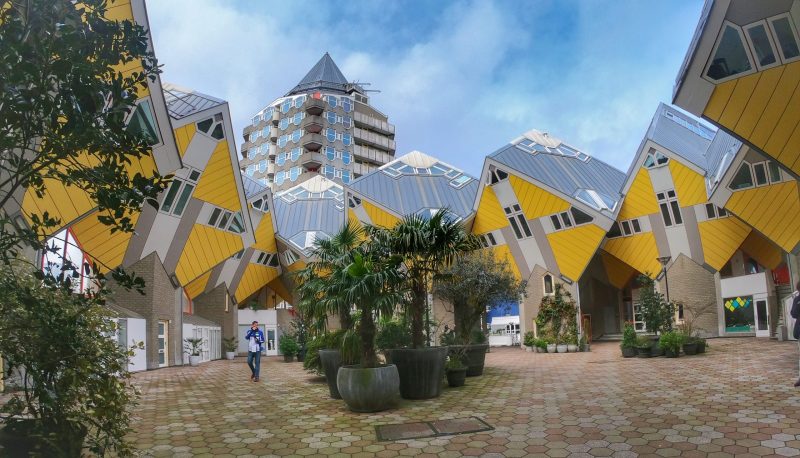
Dutch & Belgian Waterways - Medieval Cities, Art and Canals
Unlike normal river cruises this cruise takes place on a network of rivers and also canals in Belgium and the Netherlands.
Amsterdam in the Netherlands.
There is so much to see and do in Amsterdam, here are a few highlights.
Rijksmuseum is dedicated to art and history of the Netherlands with thousands of pieces of art from Dutch masters including Rembrandt, Vermeer and Van Gogh.
Anne Frank House, is a house and museum dedicated to the wartime diarist who hid in an annex of her family home for over two years to evade capture from the Nazi’s.
The Van Gogh Museum celebrates the life of the Netherlands most famous son, it houses the largest selection of his work in the world.
Rotterdam in the Netherlands
The Cube houses in Rotterdam have to be seen to be believed, they are bonkers, a tour inside is highly recommended.
The Erasmus Bridge dominates the Rotterdam skyline, it has a 139 metre bent steel pylon that resembles the neck of a swan, construction took 10 years
The Markthal (Market Hall) combines 228 apartments that are housed in the walls and ceiling of the building with a huge food hall.
If you love food you definitely need to visit, we recommend you try the dragon balls!
Antwerp in Belgium
Here you will find the Cathedral of our Lady which is a Roman Catholic gothic style cathedral that dates back to 1521 and took almost 200 years to complete. The cathedral holds many significant art pieces by the artist Peter Paul Rubens whose former home and studio is among Antwerp’s major attractions.
The Grote Markt is the central square of Antwerp in the heart of the old city quarter, the centre piece is the renaissance town hall which dates back to the 1560’s.
Ghent in Belgium
Gravensteen Castle is in East Flanders and dates back to 1180, it has had many uses over the years including a court, prison, mint and a cotton mill. It’s now a museum and a major landmark in the city.
Graslei is a mediaeval port dating back to the 11th century, the Graslei (grass Quay) is lined with beautiful coloured guild halls and mansions that were constructed between the 12th and 15th century. Graslei is now a bustling tourist hot spot with outdoor cafes, bars and restaurants.
Saint Bavo’s Cathedral is a Roman Catholic cathedral, this gothic style construction stands 89 metres high and is well over a thousand years old, it is famous for its altarpiece called the adoration of the mystic lamb.
Veere in the Netherlands
Veere is a historically rich and charming town in the Zeeland province of the Netherlands. The Grote Kerk (Great Church) is a late gothic church dating back to 1470, it now hosts exhibitions and the Grote Kerk Veere.
Scottish Houses, Veere was once a medieval Scottish trading port and has two historic Scottish merchants houses on the quay as part of Museum Veere. The reigning Dutch monarch still carries the title of the Marquis of Veere.
A Dutch and Belgium waterways cruise is best suited to people who love medieval architecture, art, museums, canals.
The Danube - Packed with European History
The Danube passes through more countries than any other river cruise including major capitals and small historic towns depending on the individual itineraries.
Budapest in Hungary
The Hungarian Parliament Building dates back to 1904 and is the seat of the National Assembly of Hungary, it took 17 years to build and contains 40 million bricks. Make sure you are on deck for sailaway especially at night.
Budapest has over 50 thermal baths fed by well over 100 natural thermal springs, it’s well worth visiting for its historic architecture and cultural traditions.
Fisherman’s Bastion is probably the most well known monument in Budapest, situated near Buda Castle (also well worth a visit) parts date back to the 1700’s. The seven high towers are said to represent the seven chieftains who founded Hungary in 895.
Vienna in Austria
If you love Palaces you will be spoiled for choice with Schönbrunn Palace, Hofburg Palace and Belvedere palace all situated in the city.
St Stephen’s Cathedral, this Romanesque and Gothic designed Cathedral began construction in 1137 and took almost 450 years to complete. The roof on St Stephen’s is 111 metres (364 feet) long and is covered by 230,000 glazed tiles.
Mozart’s House, despite being from Salzburg, Mozart spent the last 10 years of his life in Vienna where he transformed himself from a court musician into a freelance composer, his house in Vienna is now a museum.
Bratislava in Slovakia
Bratislava Castle dates back to the 9th century, its hilltop location gives you views of the Danube and Bratislava’s old town, the Baroque courtyards and gardens are a must see and are free to enter.
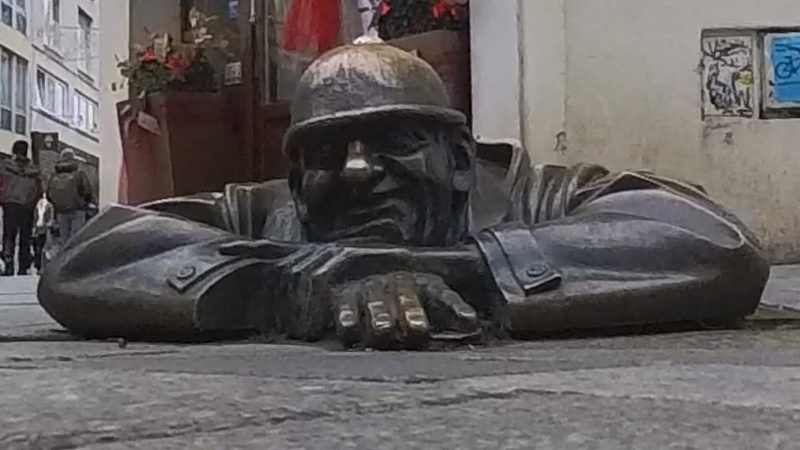
Bratislava Old town is filled with quirky street art, mediaeval architecture and lively squares. Some quirky street art to look out for is Čumil; this bronze statue is one of many dotted around the city, it depicts a worker peeking out from a manhole, this photo opportunity is too good to miss.
St Martin’s Cathedral dates back to 1452, this gothic structure sits opposite Bratislava castle and is the largest church in the country.
Linz in Austria
Ars Electronica Centre is a futuristic museum featuring media art and technology and hosts the world famous Ars Elektronica Festival which attracts well over 100,000 visitors annually
The Old Town, this historic city centre sits on the banks of the Danube has lively squares, cobblestone alleys and pastel facades, the centre piece is the Hauptplatz (main square) features the white marble trinity column and the old town hall.
Linzer Torte is the oldest cake recipe in the world, made from shortcrust dough with ground nuts, filled with fruit jam and covered with a lattice top.
Dürnstein in Austria.
Now in ruins this Austrian castle dates back to 1130, sitting over 300 metres above sea level, Richard the Lion Heart was imprisoned here when he was captured on his way back from the third crusade.
The Blue and White Church Tower of Dürnstein Abbey has a spectacular azure blue and white tower that is considered to be the ultimate landmark in the UNESCO world heritage Wachau region, parts of the church date back to 1410.
Melk in Austria
Melk Abbey towers high above the town of Melk in lower Austria, this Benedictine abbey dates back to the 11th century, it’s considered to be one of the finest examples of Baroque architecture in the world.
The Library in the abbey has stunning Fresco ceilings and houses over 100,000 medieval manuscripts that are priceless.
Melk is the starting point of the 36 kilometre valley that is filled with steep terraced vineyards that produce world class white wine including Riesling and Grüner Veltliner
Local taverns (Heuriger Taverns) offer wine tasting during the autumn harvest when you are invited to try neuer wein (new wine).
Regensburg in Germany
Regensburg was a major medieval trading post and Roman settlement.
Regensburg Cathedral is an excellent example of gothic architecture in the German state of Bavaria, construction started in 1520 and continued for hundreds of years, it stands 105 metres high.
When it was built in the 12th century this stone bridge (Steinerne Brücke) was considered an engineering masterpiece and the only way to cross the Danube for hundreds of miles.
The Old Town in Regensburg features nearly 2000 years of history, it managed to survive World War II making it one of the best preserved old towns in the whole of Germany.
A Danube river cruise is a great choice for a first time cruiser as it covers so many different themes and countries, there is so much to see and you will almost certainly come back for more!
We cruised the Danube on TUI Isla, you can find out all about it here!
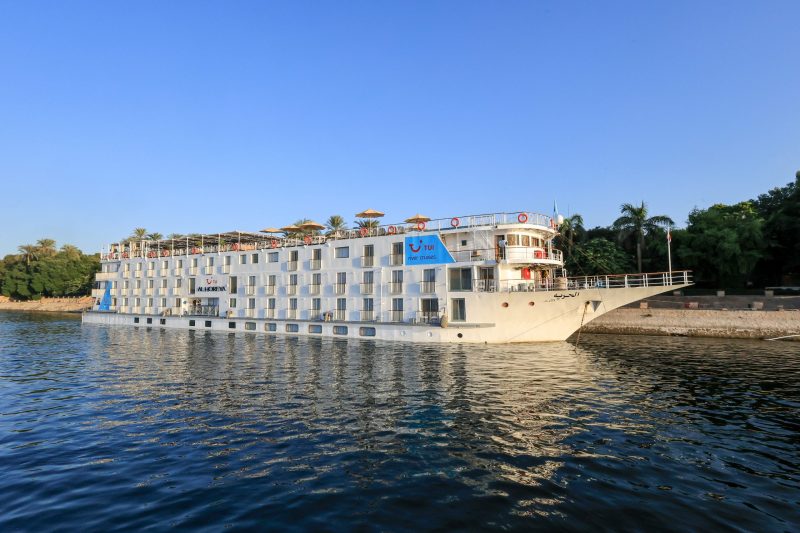
The Nile - The choice for ancient history
TUI Nile river cruises take history to the next level, starting and ending in Luxor.
Luxor in Egypt
Valley of the Kings is the final resting place for legendary Egyptian rulers Ramesses II before being reinterred and Thutmose I who is widely believed to be the first ever Pharaoh to be buried in the valley some 3500 years ago. Royal tombs of incredible historical significance are remarkably preserved showing vibrant wall paintings and hieroglyphics giving you a glimpse into the afterlife that ancient Egyptians believed so strongly in.
Tutankhamun (King Tut) is arguably the most famous pharaoh in the valley of the kings after his fully intact tomb was discovered by Howard Carter in 1922. Avenue of the Sphinxes is an ancient roadway that links the Luxor temple to the Karnak temple, this 1.7 mile road is lined with Ram headed lion bodied statues. Also known as the path of god this avenue dates back to 3400 BC.
Luxor Temple, found at the end of the aforementioned Avenue of the Sphinxes is a huge ancient Egyptian sanctuary originally commissioned by Amenhotep III and later expanded by King Tut, Horemheb, and Ramesses II and is dedicated to the rejuvenation of Kingship.
Edfu in Egypt
The Temple of Edfu is dedicated to the Egyptian Falcon headed god Horus, who is the god the sky and the sun, war and hunting and divine kingship.
Construction of the temple started in 237 BC and took 180 years to complete, the Edfu temple represents the pinnacle of ancient Egyptian architecture, and is one of Egypt’s best preserved temples.
The Temple of Edfu also contains what is believed to be one of the most extensive collections of hieroglyphics in existence.
Kom Ombo in Egypt
Kom Ombo Temple is a double temple, the only one of its kind in Egypt, featuring a unique symmetrical design, what makes it even more unusual is the fact that it is dedicated to two different gods.
One half is dedicated to Horus the falcon headed god who we mentioned above and the other is to Sobek the crocodile god, another very unusual thing about this temple is that there are carvings on the walls depicting medical surgical tools like saws and scalpels, the temple is well over 2000 years old.
If Kom Ombo temple is on your tour your tickets also give you entry to the Crocodile museum, where you can see mummified crocodiles as big as 15 feet long. As well as crocodiles there are also tributes to the crocodile god Sobek in the form of carved stone figures.
Aswan in Egypt
The Aswan High Dam, this is the most recent historical thing you will see on your cruise, dating back a mere 65 years.
Causing much controversy at the time, its construction displaced many local villages when 310 miles of the Nile valley was flooded to create Lake Nasser.
The Philae Temple dates back to 330 BC and honours the goddess Isis who was the goddess of motherhood, magic, healing and protection, it also honours her husband Osiris and their son Horus. After threats of floods the temple was moved from its original home on Philae island to its new home on Agilkia island, UNESCO dismantled all 40,000 stone blocks then reassembled them at the temples new home
The Unfinished Obelisk is the largest obelisk in the world, dating back to around 1500 BC, if finished would have weighed over 1000 tonnes and would have been over 130 feet high.
A Nile cruise is ideal for someone who is into ancient civilisation, pharaoh, temples and archaeology. It is a totally different experience to anything a European river cruise has to offer.
So Which River Is Right For You?
We hope you have found this blog post informative, there is definitely a TUI river cruise to suit all tastes. Hopefully this information will make it easier for you to decide which river cruise is best for you!
Do follow us on social media so we can take you along on our future travels!


Share this content with your friends!
RELATED BLOGS
How to Remain Fit and Healthy on a Marella Cruise

Marella Cruise & Stay Holidays

Marella Cruises Celebration Packages
